
How to Get a Cat to Drink More: Expert Hydration Tips

What if the traditional water bowl is actually the primary obstacle to your cat's long-term health? Many owners find themselves searching for how to get a cat to drink more as they watch fresh water quickly collect dust and biofilm. Since chronic kidney disease affects up to 40 percent of cats over age 10, the stakes for maintaining a clean, reliable water source are high.
You understand that hydration is vital, yet noisy fountains and messy bowls rarely offer a sophisticated solution. No more noisy pumps; no more slimy biofilm; no more constant refilling. We'll show you how to move beyond basic tricks to a science-based management of water delivery that prioritizes quality and filtration over simple coaxing.
We'll explore how a dedicated pet hydration solution like Torus creates a reliable routine for your cat. You'll discover the logic of controlled water exposure and learn how to maintain a clean, modern home aesthetic while protecting your cat's wellbeing through smarter water storage and delivery.
Key Takeaways
- Understand why cats instinctively avoid stagnant sources and how their evolutionary history dictates their preference for fresh water.
- Learn how to get a cat to drink more by managing water quality and reducing exposure to the bacterial biofilm found in traditional bowls.
- Identify the optimal placement for hydration stations within your home to support a stress-free environment that aligns with feline behavior.
- Move beyond noisy electronic fountains toward a sophisticated, non-electric system that ensures consistent delivery of filtered water.
- Discover a practical routine for monitoring hydration markers that prioritizes long-term kidney health and overall feline wellbeing.
The Feline Hydration Gap: Why Cats Instinctively Ignore Their Water
Many owners label their cats as "picky" when they refuse to use a water bowl. This label is a misunderstanding of biology. Your cat's behavior is actually a highly evolved survival mechanism inherited from their desert-dwelling ancestors. The Feline Hydration Gap exists because domestic cats are physiologically designed to obtain the majority of their moisture from prey rather than standing water sources.
In the wild, still water is often a breeding ground for bacteria and parasites. This has hard-wired a "stagnation trigger" into the feline brain. When a cat looks at a still, open bowl, their instincts signal a potential risk. This internal conflict is the primary hurdle when considering how to get a cat to drink more; you aren't just fighting a preference, you're fighting thousands of years of evolutionary caution.
The Ancestral Thirst Drive
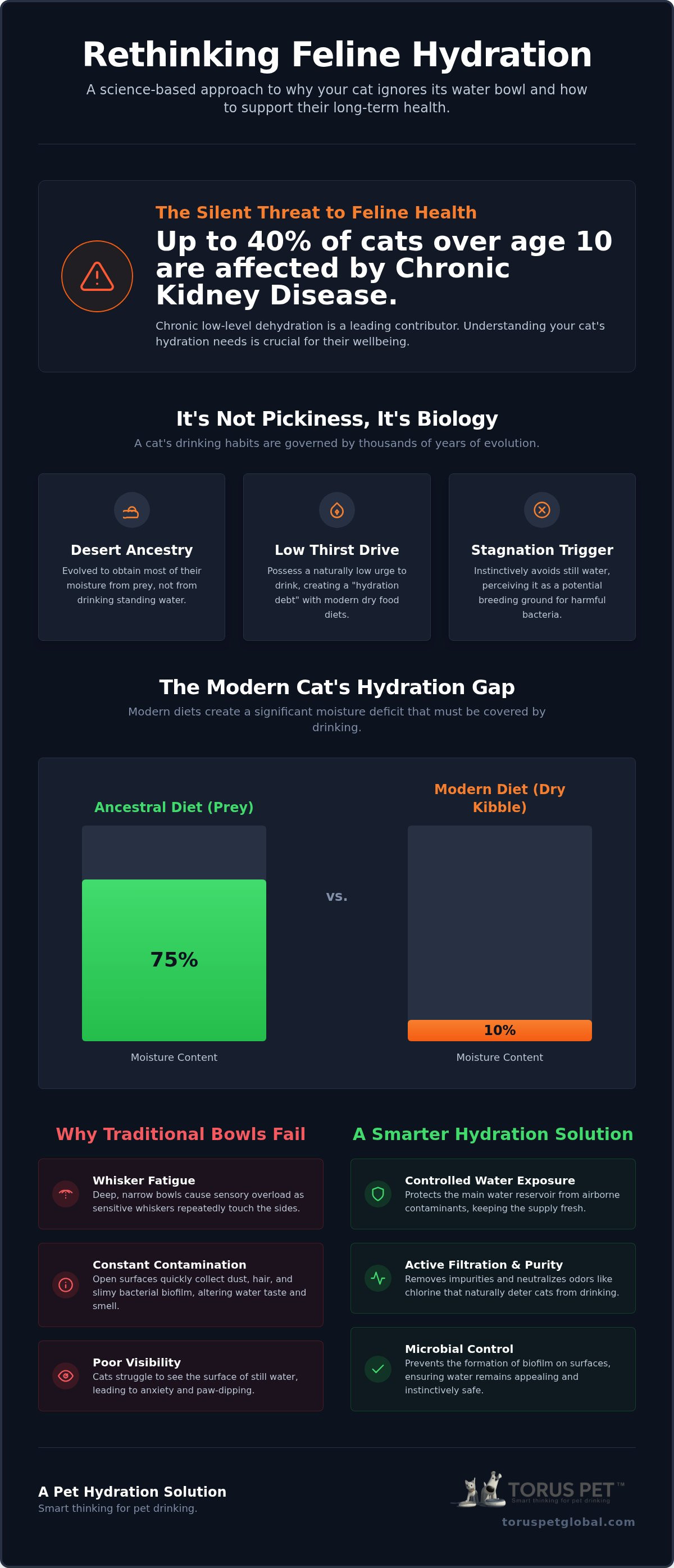
A cat's body is composed of approximately 75 percent water. Despite this, they possess a naturally low thirst drive. In their ancestral environment, a diet of fresh prey provided nearly all necessary hydration. Modern dry kibble, which typically contains only 10 percent moisture, creates a significant "hydration debt" that most cats struggle to pay back through drinking alone.
Chronic low-level dehydration is a quiet threat. It's a leading contributor to urinary tract issues and chronic kidney disease, which affects up to 40 percent of cats over the age of 10. Understanding this physiological gap is the first step in moving toward a more proactive, science-based hydration strategy that respects their unique biological needs.
Why Traditional Bowls Fail Feline Instincts
Standard water bowls are often designed for human convenience rather than feline biology. Open vessels quickly accumulate dust, hair, and a slimy bacterial layer known as biofilm. While a human might not notice these contaminants, a cat's superior sense of smell detects the staleness immediately. This often leads them to seek out "fresher" sources like a dripping tap or even a toilet.
- Whisker Fatigue: Deep, narrow bowls cause a cat's sensitive whiskers to touch the sides, creating sensory overload and discomfort during drinking.
- Contamination Risk: Open water is exposed to environmental debris the moment it's poured, compromising quality.
- Visibility Issues: Cats struggle to see the surface of still water, which can cause anxiety and lead to "paw dipping" to check the level.
By shifting the focus from simple tricks to the fundamental mechanics of how water is stored and delivered, we can bypass these instinctual barriers. High-quality hydration is about more than just accessibility; it's about providing a source that feels instinctively safe, clean, and fresh to a discerning animal.
Beyond Fountains and Flavours: The Science of Water Quality
Many owners try adding tuna juice or broth as a way of figuring out how to get a cat to drink more. While this might work temporarily, it introduces organic matter that accelerates bacterial growth and creates a messy environment. A more sustainable, sophisticated strategy focuses on the fundamental purity of the water itself. High-quality hydration is not about masking the taste of tap water; it's about removing the contaminants and odors that trigger a cat's instinctual avoidance.
- Chemical Neutralization: Removing chlorine odors that deter drinking.
- Physical Purity: Eliminating airborne dust and dander before it enters the water.
- Microbial Control: Preventing the formation of slippery biofilm on internal surfaces.
The Biofilm Problem in Pet Hydration
Biofilm is the invisible, slippery layer of bacteria that colonizes surfaces in contact with water. In traditional plastic or ceramic bowls, these colonies establish themselves within hours. Once present, biofilm alters the water's odor, signaling to your cat that the source is potentially hazardous. In utilizing antimicrobial hydration systems like Torus provide an active defense by preventing bacterial attachment and growth at the source.
Environmental factors like airborne dust, pet dander, and trace cleaning chemicals also compromise water quality. Because cats have a highly developed sense of smell, they detect these subtle changes long before we do. Maintaining a clean hydration environment is essential for long-term health, as documented in these Expert Hydration Tips from the Cornell Feline Health Center.
The Role of Filtration in Feline Preference
Tap water often carries heavy metals and chlorine. While safe for humans, these are highly noticeable to a feline's sensitive palate. Carbon and ion-exchange filters strip away these chemical signatures and neutralize off-putting odors. Effective filtration mimics the purity of a natural spring, providing the high-quality resource your cat instinctively craves.
A proactive approach to hydration involves managing how water is delivered and stored. Systems that control water exposure, like Torus, ensure that every sip remains as fresh as the first. This reduces the need for the "tricks" often suggested elsewhere and creates a reliable, clean routine that fits a modern home aesthetic.
Optimising the Hydration Environment for Modern Homes
Many owners assume that placing a bowl in every room is the answer to how to get a cat to drink more. This "quantity over quality" approach often backfires. More bowls frequently lead to more stagnant water, higher cleaning labor, and more opportunities for airborne dust to settle. Instead, focus on creating a few high-quality hydration stations that respect your cat's need for safety, silence, and cleanliness.
A successful hydration environment isn't just about accessibility. It's about psychology. Your cat needs to feel secure during what they perceive as a moment of vulnerability. By strategically managing the location and delivery method of their water, you can eliminate the environmental stressors that cause them to ignore their bowl in favor of the kitchen tap. That's where a full hydration system like Torus can make all of the difference.
Strategic Placement: Separation from Food and Litter
Cats are biologically programmed to avoid water sources located near their food or waste. In their ancestral environment, a kill near a water source could lead to organic contamination. This instinct remains remarkably strong in modern homes. If the water bowl is right next to the food dish, your cat may view it as "dirty" and seek out alternatives.
Choose quiet, low-traffic areas where your cat won't be startled by passing foot traffic or loud appliances. For modern homes with sensitive flooring, look for non-tipping designs that prevent spills and maintain a clean aesthetic. Elevating the station slightly can also help, as it allows your cat to maintain a more comfortable posture while keeping a better eye on their surroundings.
Comparing Hydration Delivery Systems
The mechanism of delivery is just as important as the location. Electronic fountains are a popular choice, but they come with significant downsides for both the pet and the owner. The constant mechanical hum can be off-putting for sensitive cats, and the complex internal pumps are notoriously difficult to keep free of the biofilm discussed earlier.
Transitioning to advanced reservoir systems offers a more streamlined, reliable solution. These non-electric designs use gravity to dispense fresh water as needed, providing the quiet environment cats prefer. Because they store the main supply in a protected internal reservoir, they significantly reduce the time water is exposed to the air before it's consumed.
Systems that control water exposure, like Torus, ensure the drinking well stays shallow and fresh. This prevents whisker fatigue while maintaining a friction-free experience for the owner. It's a sophisticated upgrade that replaces mechanical noise with consistent, filtered hydration, ensuring your cat always has access to a source they instinctively trust.
A Strategic Hydration Routine for Thoughtful Owners
A common recommendation for how to get a cat to drink more is simply to refill their bowl daily. This advice ignores the reality that water begins degrading the moment it hits the open air. A thoughtful hydration routine isn't about the frequency of pouring; it's about the consistency of the delivery system and the quality of the resource provided.
Switching to a structured routine allows you to move from guesswork to proactive management. By focusing on how water is stored and protected, you ensure that your cat's instinctual preference for fresh water is met every time they approach the station. This transition requires a few deliberate steps to ensure long-term success and improved health markers.
Implementing Controlled Water Exposure
- Step 1: Replace and Refine. Replace open bowls with a filtered, reservoir-based system. This protects the main supply from the environmental debris and biofilm discussed in earlier sections.
- Step 2: Strategic Separation. Position the station away from the feeding area to trigger natural curiosity. This mimics ancestral hunting patterns where water and food are found in separate locations.
- Step 3: Consumption Tracking. Monitor the reservoir level to track consumption over several days. This provides a more accurate picture of total intake than trying to measure evaporation from an open dish.
While managing the drinking source is primary, integrating high-moisture foods can act as a secondary hydration strategy. Wet food diets naturally align with feline physiology, helping to bridge the hydration debt created by dry kibble. A balanced approach combines high-quality nutrition with a reliable, filtered water source.
Maintenance for Longevity and Health
The effectiveness of any hydration station depends on its upkeep. Establish a simple cleaning schedule to prevent mineral buildup from hard water. This ensures the hardware continues to function at peak performance and remains an attractive resource for your cat. Regular maintenance is the key to preventing the staleness that leads to drinking avoidance.
Filter replacements are equally vital. Over time, filters accumulate the very impurities they are designed to remove, which can eventually impact the water's taste. Understanding the maintenance logic of your system ensures that the water remains neutral and fresh. A clean system is a used system.
If you're ready to upgrade your cat's daily routine, explore our range of Pet Hydration Solutions designed for the modern home. By treating hydration as a sophisticated element of care, you provide your cat with the resources they need for long-term wellbeing.
Sophisticated Hydration: The Future of Feline Care
The search for how to get a cat to drink more shouldn't lead to a collection of colorful plastic dishes or noisy gadgets. True progress in feline care involves moving from reactive "tricks" to proactive hydration management. By shifting your focus to the science of water quality and delivery, you're not just solving a daily puzzle; you're establishing a foundation for long-term health.
Modern pet ownership is evolving. It's no longer enough to provide the basics. Today's owners look for solutions that integrate naturally into their lives while offering tangible biological benefits. Sophisticated hydration is the intersection of high-level design and rigorous filtration, ensuring that your home remains a clean, calm sanctuary for both you and your cat.
Investing in Feline Longevity
Proper hydration is one of the most effective ways to support kidney function and urinary health. By providing a consistent source of cleaner water, you help reduce exposure to the contaminants that lead to chronic issues. This proactive approach acts as a long-term investment, potentially reducing future veterinary costs associated with dehydration-related illnesses.
- Reliability: Non-electric systems provide peace of mind during power outages or when you're away from home.
- Consistency: Gravity-fed reservoirs ensure water is always available without the risk of mechanical failure.
- Health Markers: Improved hydration often manifests in better skin, coat quality, and overall energy levels.
Finding the right approach depends on your specific environment and your cat's unique habits. If you're unsure where to start, taking a Pet Hydration Quiz can help you identify the specific solution that fits your lifestyle. It's a simple step toward a more organized and efficient care routine.
The Intersection of Design and Health
Premium solutions, like Torus, are designed to complement modern home aesthetics while prioritizing feline biology. A sleek, well-maintained hydration station eliminates the visual clutter of traditional bowls and the auditory clutter of electronic fountains. It's a sophisticated element of care that treats water as a critical resource rather than an afterthought.
The future of pet care lies in understanding The Science of Feline Hydration. It involves a commitment to how water is stored, delivered, and maintained. When you prioritize the mechanics of hydration, you remove the instinctual barriers that prevent your cat from thriving.
The ultimate takeaway for the modern owner is that technology should simplify care, not complicate it. By choosing a system that manages water exposure for you, you gain the freedom to focus on the joy of your cat's company. Hydration is no longer a challenge to be solved; it's a quiet, reliable standard of your home.
Advancing Feline Wellness Through Smarter Hydration
Understanding how to get a cat to drink more is less about coaxing and more about providing a resource that aligns with their biology. By removing the instinctual barriers of stagnant water and noise, you create an environment where hydration becomes a natural, friction-free part of their day. A sophisticated routine prioritizes water quality, strategic placement, and the reduction of bacterial biofilm.
Modern pet care demands solutions that are as intelligent as they are aesthetically pleasing. No noisy pumps; no complicated maintenance; no exposure to airborne contaminants. By utilizing a Pet Hydration Solution with advanced internal carbon filtration and antimicrobial construction, you ensure that every sip remains fresh and inviting. These non-electric, silent systems allow your cat to drink in peace while maintaining the clean, modern aesthetic of your home.
Your commitment to long-term feline health starts with the purity of their water. Explore Sophisticated Hydration Solutions for Your Cat and discover how a science-backed approach can transform their wellbeing. It's a simple, elegant upgrade that provides lasting peace of mind for you and a healthier life for your companion.
Frequently Asked Questions
How much water should a cat drink daily?
A healthy adult cat generally requires 40 to 60 ml of water per kilogram of body weight each day. For an average 4 kg cat, this equates to approximately 200 to 240 ml of total moisture. This figure includes hydration from both drinking and food. Since wet food consists of 70 to 80 percent moisture, cats on a canned diet may appear to drink less than those on dry kibble.
Is it better for cats to have moving water?
Moving water is often preferred because it signals freshness and safety to a cat's survival instincts. In the wild, stagnant pools are more likely to harbor harmful bacteria than running streams. When considering how to get a cat to drink more, providing a source that feels fresh and uncontaminated is more effective than using simple tricks. Systems that control water exposure provide this sense of freshness without the need for constant movement.
Can cats drink tap water or should it be filtered?
While tap water is generally safe, filtered water is superior because it removes chlorine and heavy metal odors. Cats have a highly developed sense of smell and are much more sensitive to chemical additives than humans. Removing these off-putting scents makes the water more attractive. Utilizing advanced filtration mimics the purity of a natural spring, which aligns with feline preferences for clean, neutral-tasting hydration.
Why does my cat dip their paw in the water bowl?
Cats often dip their paws into water to gauge the depth or to avoid whisker fatigue. Because cats struggle to see still water right in front of them, the ripples created by a paw help them locate the surface. If the vessel is too deep or narrow, they may also use their paw to avoid the discomfort of their whiskers touching the sides. Providing a shallow, wide drinking well helps eliminate this behavior.
Are plastic water bowls bad for cats?
Standard plastic bowls can be problematic because they easily develop microscopic scratches that harbor bacteria and biofilm. These colonies are difficult to remove and can cause feline acne or other skin irritations. It's better to choose systems like Torus made from antimicrobial materials and high-quality, BPA-free PET Polypropylene reservoirs. These professional solutions are designed to reduce contamination risk and maintain a cleaner environment for your cat's daily hydration.
How can I tell if my cat is dehydrated?
You can check for dehydration by monitoring skin elasticity and gum moisture. Gently pinch the skin between your cat's shoulder blades; it should snap back into place immediately. If the skin remains "tented" or moves back slowly, they may be dehydrated. Additionally, their gums should feel slick and wet. Dry, tacky, or pale gums are a clear indicator that your cat needs immediate hydration support.
Should I use an electronic fountain for my cat?
Electronic fountains are popular but often present challenges with noise, maintenance, and complex cleaning requirements. The mechanical hum can deter sensitive cats, and the internal pumps are prone to biofilm buildup. A non-electric Pet Hydration Solution, like Torus, offers a quieter and more reliable alternative. These systems provide the same benefits of filtered, fresh water without the logistics of power cords or noisy motors.
Why won't my cat drink water next to their food?
This behavior is driven by a "contamination instinct" inherited from their wild ancestors. In nature, cats avoid drinking water near their kill to prevent organic matter from fouling the source. Even in a modern home, this instinct remains strong. Placing hydration stations in a separate, quiet location away from the feeding area is a simple yet effective strategy for how to get a cat to drink more naturally.